Elementary kids are a delightful mix of curiosity and chaos, often leaving parents and teachers in awe of their boundless energy. These little bundles of joy are on a mission to explore the world, one snack break at a time. From their imaginative games to their unique take on life’s biggest questions, they keep everyone entertained and on their toes.
Understanding Elementary Kids
Elementary kids exhibit a unique blend of traits that define their growth and learning. Curiosity drives them to explore their world, while their imaginative play fosters creativity and critical thinking.
Developmental Stages
Development occurs in distinct stages. Between ages 6 and 8, kids show characteristically increased motor skills and cognitive abilities. They’ve begun to engage in more complex social interactions, making friendships paramount. By ages 9 to 11, they typically develop a deeper understanding of cause and effect. Emotional regulation becomes important, influencing reactions to challenges and successes.
Learning Styles
Learning styles differ among elementary kids. Some thrive through visual aids. They prefer colorful charts, images, and videos to grasp new concepts. Others exhibit a strong preference for auditory learning, benefiting from discussions and storytelling. Kinesthetic learners enjoy hands-on activities, allowing them to engage physically with materials. Understanding these styles enhances teaching strategies, catering to diverse needs in the classroom.
Engaging Activities for Elementary Kids
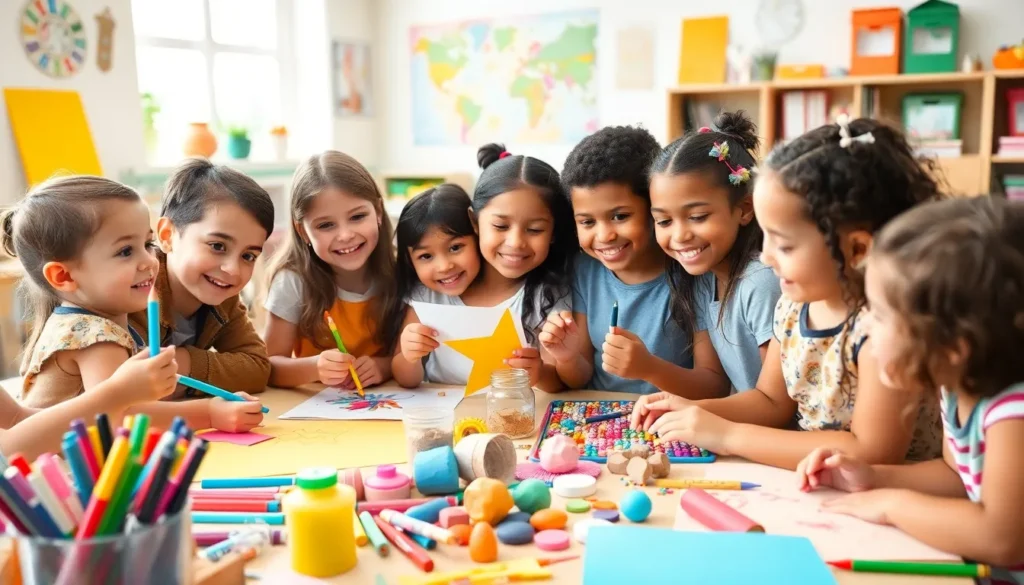
Engaging activities capture the vibrant energy of elementary kids. These activities enhance their creativity and cognitive skills while keeping them entertained.
Creative Arts and Crafts
Creative arts and crafts stimulate imagination and fine motor skills. Projects like painting, drawing, and sculpting encourage self-expression. Providing materials such as colored paper, markers, and clay allows kids to explore their artistic interests. Group projects can foster teamwork and social interaction, making art fun while learning valuable cooperation skills. Additionally, showcasing children’s work at home or in the classroom promotes confidence and reinforces their achievements.
Outdoor Educational Games
Outdoor educational games combine fun with learning, making them perfect for elementary kids. Activities like scavenger hunts can enhance problem-solving skills and build teamwork. Incorporating physical education, games such as tag or relay races improve motor skills while engaging in friendly competition. Nature walks encourage curiosity about the environment, allowing kids to explore local flora and fauna. By blending education with outdoor play, these games promote active lifestyles and a deeper understanding of the world around them.
Challenges Faced by Elementary Kids
Elementary kids encounter various challenges that can impact their growth and development. These challenges often center on social interactions and academic expectations.
Social Interaction Issues
Social interactions pose significant challenges for elementary kids. Navigating friendships becomes complex as they learn to manage emotions and resolve conflicts. Peer relationships often fluctuate, leading to feelings of loneliness and confusion. Developing communication skills becomes critical, as kids may struggle to express needs or feelings clearly. Social anxiety can also emerge, particularly in larger group settings or unfamiliar environments. Parents and educators play a vital role in guiding children to build healthy relationships and foster social skills.
Academic Pressures
Academic pressures affect elementary kids as they transition into structured learning environments. Expectations from teachers and parents can create stress, especially for those who learn differently. Standardized testing often emphasizes performance over individual growth, causing anxiety. Balancing homework with extracurricular activities can overwhelm some kids. Fostering a love for learning remains crucial, so educators should focus on engagement instead of competition. Recognizing each child’s unique learning style aids in minimizing undue stress and promoting academic resilience.
Supporting Elementary Kids at Home
Supporting elementary kids at home involves fostering their growth and learning through various strategies. Parents and caregivers play a vital role in this process.
Encouraging Reading Habits
Encouraging reading habits significantly enhances literacy skills. Parents can introduce age-appropriate books to spark interest. Visiting the library regularly offers kids access to a wider range of topics. Daily reading for 20 minutes improves comprehension and retention. Engaging in discussions about stories encourages critical thinking and vocabulary development. Incorporating fun reading activities, like book clubs or reading challenges, makes the experience enjoyable and social.
Establishing a Routine
Establishing a routine helps kids feel secure and improves their focus. Consistent schedules for homework, chores and playtime create a structured environment. Parents can set aside specific times for reading or educational games. Morning and evening rituals foster independence and responsibility. Incorporating breaks during study sessions allows for mental refreshment. This predictability supports emotional regulation and enhances learning outcomes, making daily tasks more manageable for kids.
Elementary kids are a dynamic force filled with curiosity and creativity. Their journey through growth and learning is marked by unique challenges and triumphs that shape their development. By fostering an environment that encourages exploration and imaginative play, parents and educators can help nurture their potential.
Supporting their diverse learning styles and emotional needs plays a crucial role in building resilience. Through engaging activities and structured routines, kids can thrive both academically and socially. Embracing this vibrant stage of life not only enriches their experiences but also lays the foundation for lifelong learning and growth.