Riddles are like little puzzles that tickle the brain and spark creativity. For elementary kids, they’re not just a fun pastime; they’re a doorway to critical thinking and problem-solving skills. Imagine the delight on a child’s face when they crack a tricky riddle! It’s a mix of joy and triumph that can turn any ordinary day into an adventure.
What Are Riddles?
Riddles are clever puzzles or statements that challenge individuals to think outside the box. They invite readers to guess the answer based on clues provided within the wording.
Definition of Riddles
A riddle consists of a question or statement that has a double or hidden meaning. This type of puzzle usually relies on wordplay and logical reasoning. Many riddles take the form of a question that needs answering, such as “What has keys but can’t open locks?” This engages the solver’s mind, prompting them to decipher the meaning. Answers to riddles often provoke a sense of surprise or delight when revealed, enhancing their appeal among children.
Importance of Riddles for Kids
Riddles play a crucial role in developing critical thinking skills. By presenting challenges that require problem-solving, they encourage children to analyze information and think creatively. Engaging with riddles also boosts vocabulary and language skills as kids encounter new words and expressions. Moreover, solving riddles fosters a sense of accomplishment, building confidence. Each riddle solved reinforces perseverance and resilience, qualities essential for lifelong learning and growth.
Types of Riddles
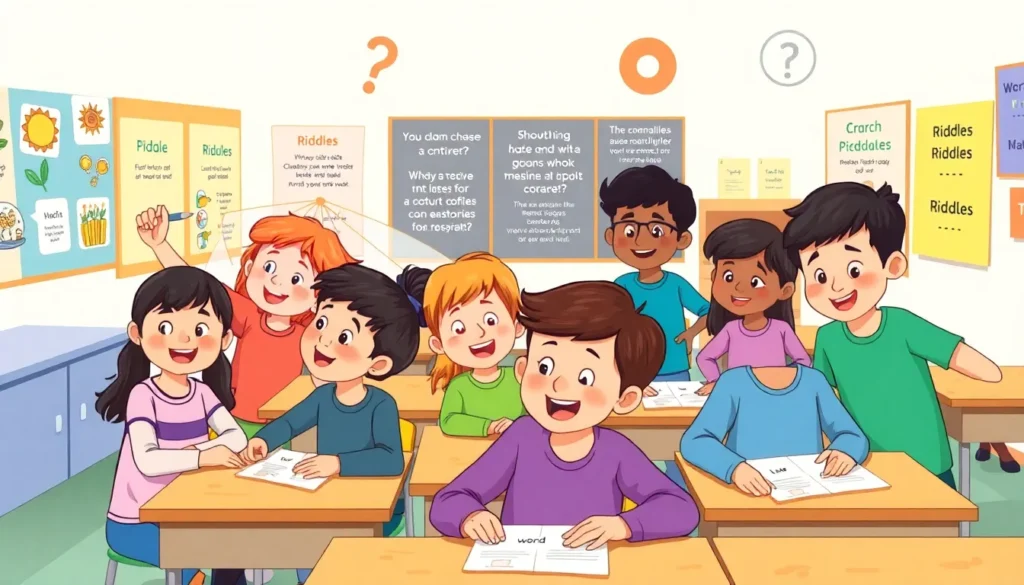
Riddles come in various forms, enticing young minds and enhancing their problem-solving abilities. Three common types include word riddles, visual riddles, and math riddles.
Word Riddles
Word riddles engage children’s language skills through clever wordplay. They often present a question or statement with a twist that requires thoughtful interpretation. Examples include classic riddles like “What has keys but can’t open locks?” Answering such riddles encourages kids to think critically about language and its meanings. These puzzles not only entertain but also expand vocabulary by introducing new terms and phrases.
Visual Riddles
Visual riddles captivate young learners with images that prompt analytical thinking. They commonly present a scenario or picture that contains hidden elements to decipher. For instance, a drawing might depict an object that appears different from its usual form, challenging kids to think creatively. Solving visual riddles enhances observation skills and encourages children to notice details often overlooked in everyday life.
Math Riddles
Math riddles teach problem-solving through numerical challenges. They require critical thinking and logic, often combining math concepts with playful language. An example might ask, “I’m an odd number. Take away one letter, and I become even. What number am I?” Such riddles encourage kids to approach math in a fun way. They also strengthen calculation skills and foster a positive attitude toward numbers.
Benefits of Riddles for Elementary Kids
Riddles provide numerous advantages for elementary kids, aiding in their cognitive and social development. These clever puzzles encourage various skills.
Enhancing Critical Thinking
Riddles stimulate analytical skills in children. Solving a riddle often requires them to evaluate clues and analyze information creatively. Engaging with different types enables kids to approach problems from various angles. They develop an ability to think logically while connecting ideas, reinforcing problem-solving strategies. Each successful resolution boosts confidence, fostering a growth mindset. Consequently, children become more adept at tackling challenges beyond riddles, preparing them for future academic endeavors.
Boosting Language Skills
Riddles enrich vocabulary through playful wordplay. Children encounter new words and phrases as they navigate clever statements, expanding their linguistic range. This engagement prompts discussions about meanings and context, enhancing comprehension. Additionally, kids practice language skills by articulating their thoughts and reasoning aloud. Such interaction strengthens their verbal abilities, making communication more effective. Riddles sharpen listening skills, too, promoting better understanding of spoken language.
Encouraging Social Interaction
Riddles create opportunities for kids to collaborate and share insights. Working in groups often leads to vibrant discussions as they tackle puzzles together. This social aspect encourages teamwork, enhancing interpersonal skills like communication and negotiation. Kids learn to respect different viewpoints while collectively searching for solutions. Moreover, the joy of sharing riddles cultivates friendships, fostering connections among peers. As they laugh and bond over challenging puzzles, children develop a sense of community.
Fun Riddles for Elementary Kids
Riddles entertain and challenge elementary kids, engaging their minds and sparking curiosity. Below are some classic and age-appropriate riddles designed specifically for young learners.
Classic Riddles
Classic riddles capture attention with their straightforward yet clever structures. These riddles often involve simple wordplay, making them accessible for children. For example, “What has keys but can’t open locks?” the answer is a piano. Another popular riddle is, “What has to be broken before you can use it?” The answer is an egg. Such riddles stimulate imaginative thinking and encourage kids to consider multiple interpretations.
Age-Appropriate Riddles
Age-appropriate riddles cater to the developmental stages of elementary children. Simple formats make them engaging and ensure comprehension. An example includes, “What has hands but can’t clap?” The answer is a clock. Another riddle states, “What has a face and two hands but no arms?” The answer is again a clock. These riddles not only challenge but also promote verbal skills, critical thinking, and interactive dialogue among peers.
Tips for Presenting Riddles to Kids
Presenting riddles to kids can be a fun and engaging experience. Effective strategies can enhance participation and enjoyment.
Making It Interactive
Engaging kids with riddles involves making the experience interactive. Utilizing props or visual aids captivates attention and brings riddles to life. Encouraging kids to act out riddles fosters creativity and helps them visualize concepts. Asking guiding questions prompts critical thinking without giving away answers, allowing kids to explore their ideas freely. Incorporating movements or sounds adds an energetic element, making the activity more dynamic. Each riddle can become part of a game, turning learning into an adventure that kids eagerly participate in.
Encouraging Team Participation
Fostering teamwork enhances the riddle-solving experience. Forming small groups encourages kids to brainstorm together, sharing ideas and perspectives. Group discussions allow them to evaluate clues collectively, promoting critical thinking and camaraderie. Assigning roles, such as clue-givers and solvers, keeps everyone engaged and invested in the outcome. Celebrating group successes reinforces positive interactions, making the experience memorable. Each child can contribute, ensuring that everyone feels valued and included in the process.
Riddles offer a fun and effective way for elementary kids to enhance their cognitive skills while enjoying playful challenges. They not only stimulate critical thinking and creativity but also promote social interaction among peers. Engaging in riddle-solving helps children develop essential skills like perseverance and teamwork, making learning a delightful experience.
By incorporating various types of riddles into activities, parents and educators can create an enriching environment that fosters growth and a love for learning. Ultimately, riddles transform ordinary moments into exciting adventures, leaving kids eager to explore and solve more puzzles.